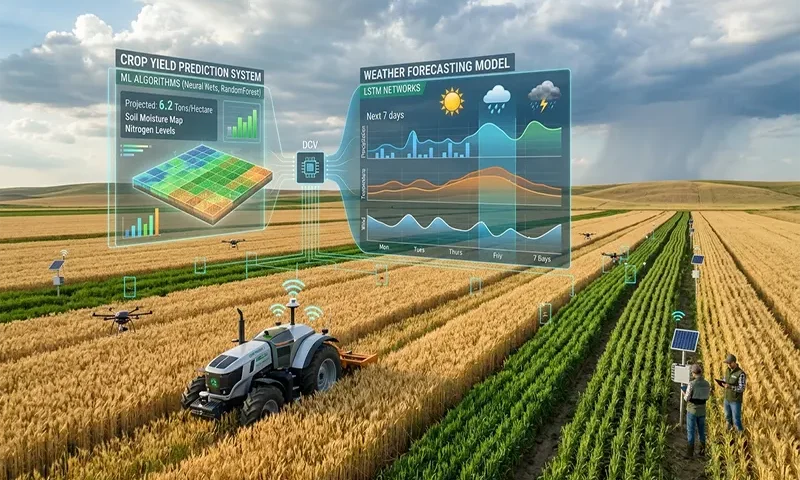
Machine Learning Algorithms for Crop Yield Prediction and Weather Forecasting

Extreme weather volatility directly threatens global food security and agribusiness profitability. As climate shifts disrupt historical baselines, traditional agricultural models—which rely heavily on static regional averages and historical look-back tables—increasingly fail to provide accurate guidance.

Modern precision agriculture addresses this challenge by deploying machine learning (ML) architectures. Instead of relying on broad generalizations, ML processes multi-dimensional, hyper-local data streams. This approach handles two distinct but deeply connected tasks: modeling complex atmospheric dynamics to forecast local weather conditions, and decoding biological responses to predict plant growth and crop yields.

Algorithmic Engines for Weather Forecasting

Traditional Numerical Weather Prediction (NWP) models rely on physics equations to simulate fluid dynamics and thermodynamic changes in the atmosphere. While highly structured, NWP models are computationally expensive and struggle with localized, short-term forecasting. Machine learning approaches bypass these physics-heavy simulations by treating weather forecasting as a data-driven, spatio-temporal modeling challenge.

Sequential Deep Learning: LSTMs and GRUs

Read More
Beginner Computer Vision Projects Using Python and OpenCV

Computer vision is one of the most dynamic subfields of computer science, driving innovations from autonomous vehicles to augmented reality. At the center of this revolution is OpenCV (Open Source Computer Vision Library), an open-source framework optimized for real-time computational throughput.

Many beginners believe that computer vision requires training massive, resource-heavy deep learning models. However, classical image processing—manipulating pixel matrices, color spaces, and geometric transformations—is computationally efficient and highly effective. These three interactive projects will take you from working with static images to processing real-time webcam data streams using Python and OpenCV.

Project 1: Automated Document Scanner & Perspective Correction

The Concept

When you photograph a document or a receipt at an angle, the perspective becomes skewed. This project recreates the core engine of mobile document-scanning apps. The program takes a skewed image, isolates the edges of the document, finds its four corners, and applies a perspective warp to yield … Read More

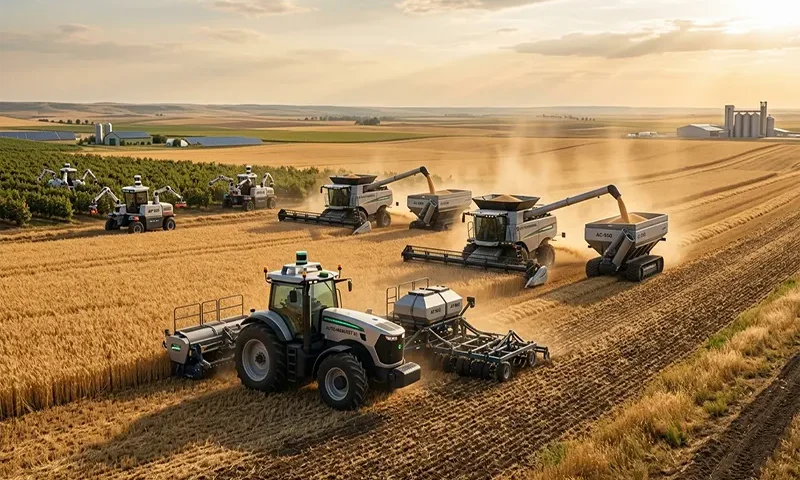
Best AI-Powered Autonomous Tractors and Harvesting Robots for Large-Scale Farming

Large-scale commercial farming operates on Razor-thin margins and incredibly compressed seasonal timelines. In recent years, these pressures have been severely compounded by chronic agricultural labor shortages and unpredictable global weather patterns. When a crop reaches peak readiness, a delay of even 48 hours due to a missing equipment operator can result in millions of dollars in spoiled yield.

To combat these bottlenecks, the agricultural sector is undergoing a profound shift away from human-dependent operations toward autonomous fleet orchestration. By integrating artificial intelligence, robotics, and advanced machine vision, heavy machinery can now operate continuously, maximizing input efficiency and maintaining tight operational windows without a driver ever stepping into a cab.

Top Autonomous Tractors Redefining Broad-Acre Farming

The backbone of primary field operations—deep tillage, broad-acre planting, and air seeding—is being fundamentally transformed by high-horsepower autonomous tractors capable of unmanned, 24-hour runtime.

John Deere 8R/8RX Autonomous Tractors

John Deere represents the vanguard of … Read More

How to Build an End-to-End Machine Learning Project with Deployment

A widely cited industry statistic warns that roughly 90% of machine learning models never reach production. Data science teams frequently excel at training models inside Jupyter Notebooks, but failure occurs when attempting to transition that isolated code into a reliable, scalable software system.

Building an “end-to-end” machine learning project means breaking away from iterative, manual experimentation and building a structured, reproducible pipeline. True MLOps engineering treats the machine learning model not as a standalone artifact, but as one component of a larger software architecture.

Phase 1: Problem Definition and Data Engineering

Every successful machine learning project begins with clear scoping and a baseline metric. Before writing code, you must define what success looks like—whether that is minimizing Root Mean Squared Error ($RMSE$) for pricing predictions or maximizing the $F_1\text{-score}$ for a fraud detection system.

[ Raw Data Sources ] ──► [ Ingestion Script ] ──► [ Validation ] ──► [ … Read More

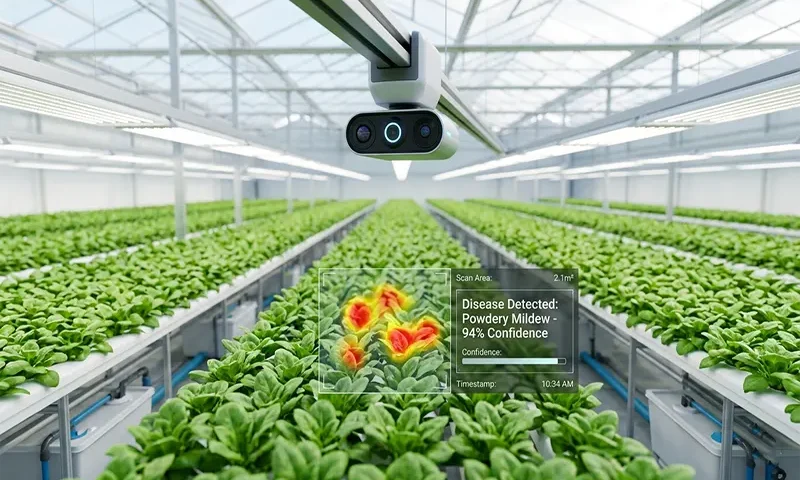
How to Use AI for Pest Detection and Crop Disease Management

The global agricultural sector faces a staggering challenge: up to 40% of global crop yields are lost to pests and plant diseases annually, costing the global economy over $220 billion. For generations, combating these threats meant reactive firefighting—blanketing entire fields in chemical pesticides after an outbreak had already taken hold.

However, a shift is underway. Artificial Intelligence (AI) is transitioning modern farming from a reactive struggle to predictive, precision agriculture. By transforming raw visual and environmental data into actionable insights, AI allows growers to detect, identify, and manage crop threats before they can devastate a harvest.

How AI Detects Pests and Diseases

Modern AI doesn’t just automate tasks; it observes, learns, and predicts. To manage crop health, AI frameworks primarily rely on two core technologies: Computer Vision and Predictive Analytics.

Computer Vision: The Digital Agronomist

At the heart of visual AI detection are Convolutional Neural Networks (CNNs) and real-time … Read More