
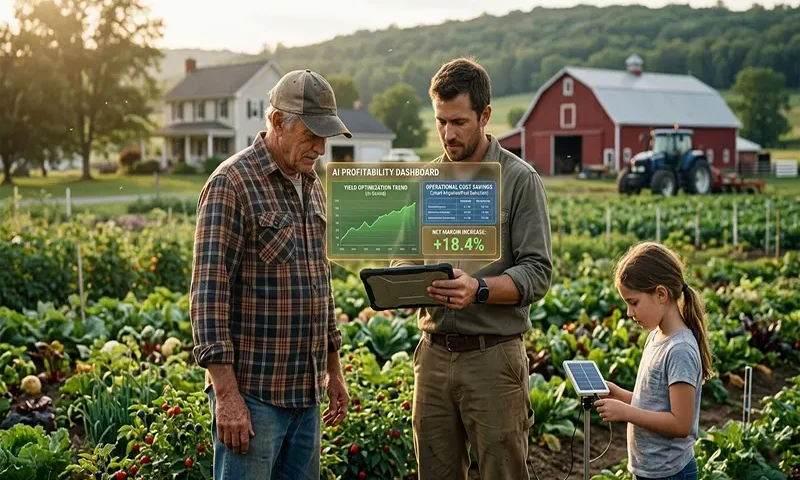
In modern agriculture, the commercial conversation surrounding artificial intelligence (AI) is dominated by multi-million-dollar innovations: autonomous combine harvesters, massive drone fleets, and enterprise-grade robotic weeders. While corporate mega-farms can easily absorb the high capital requirements of these systems, small-scale independent family farms operate on razor-thin margins. For these multi-generational operations, investing in high-end automation is financially unfeasible.
This disparity creates an “AgTech Divide.” However, AI does not have to be an expensive corporate luxury. When approached with a lean, software-first strategy, artificial intelligence can serve as a financial equalizer. For small-scale operations, the path to AI profitability lies not in increasing overall production volume, but in optimizing resource efficiency and lowering operational input costs.
Low-Cost, High-Yield AI Entry Points for Family Farms
To remain profitable, small family farms must avoid proprietary hardware ecosystem lock-ins. Instead, operators can utilize bootstrapped agtech solutions that leverage existing infrastructure, cloud-hosted software-as-a-service (SaaS) models, and standard mobile devices.
1. Computer Vision Pest and Disease Diagnostics
Instead of deploying expensive field-scanning hardware, family farmers can use smartphone applications powered by advanced computer vision algorithms (such as Plantix or specialized cooperative extension tools). By capturing a photo of a distressed leaf, the model instantly cross-references regional databases to diagnose crop blights, fungal infections, or specific insect infestations. This allows operators to apply localized treatments rather than paying for broad, preventative field sprayings.
2. Micro-Climate Algorithmic Forecasting
Standard weather applications lack the hyper-local precision required to manage delicate microclimates, such as low-lying frost pockets or wind-exposed hillsides. Free and low-cost AI weather models ingest regional satellite data, historical geographic patterns, and local sensor telemetry to generate highly accurate predictive windows. This gives family farms a vital lead time to protect high-value crops ahead of frost events or schedule irrigation before major dry spells.
3. Smart Hardware Retrofitting
The most significant hardware breakthrough for small farms is the ability to retrofit existing, older machinery. Instead of buying a new autonomous tractor, farmers can attach smart, computer vision-driven weed spot-spraying kits (such as those from Bilberry or green-on-green camera modules) directly onto legacy boom sprayers. These AI-powered cameras scan the ground in real time, activating individual spray nozzles only when a weed is detected beneath the lens.
Financial Comparison: Traditional Practices vs. Lean AI Interventions
The economic impact of transitioning from uniform, legacy farming practices to data-driven AI interventions shows a clear reduction in operating expenses (OpEx):
| Agricultural Operation | Traditional Approach | Lean AI Intervention | Upfront Capital Cost | Direct Cash-Flow Impact |
| Weed Control | Broadcast field-wide herbicide application. | Computer vision spot-spraying camera attachments. | $3,000 – $6,000 (Retrofit kit) | Reduces herbicide input costs by up to 60–80% annually. |
| Crop Health Tracking | Manual scouting or reactive, field-wide fungicide application. | Mobile computer vision diagnostics & weekly satellite analytics. | $0 – $30/month (SaaS subscription) | Prevents crop loss via early detection while reducing chemical inputs. |
| Irrigation & Water | Timer-based scheduling or subjective soil feeling. | Smart evapotranspiration ($ET$) data pipelines. | $150 (Single local soil probe + app) | Lowers water consumption and reduces pumping electricity costs by 20–30%. |
Breaking Down the Return on Investment (ROI)
For an enterprise operation, ROI is driven by scaling up production over thousands of acres. For a 50-to-500-acre family farm, however, AI profitability is achieved through input optimization and risk mitigation.
┌────────────────────────────────────────┐
│ AI Crop Intelligence & Predictive Logs │
└───────────────────┬────────────────────┘
│
┌─────────────────────────┴─────────────────────────┐
▼ ▼
┌───────────────────────┐ ┌───────────────────────┐
│ Input Cost Reduction │ │ Labor Efficiency │
│ • 70% Less Herbicide │ │ • Targeted Scouting │
│ • Precise Irrigation │ │ • Reclaimed Hours │
└───────────────────────┘ └───────────────────────┘
Labor Substitution and Time Recovery
Family farms are often constrained by a small internal workforce. Manual field scouting to spot pests, diseases, or structural irrigation leaks requires dozens of hours every week. By subscribing to low-cost satellite analytics platforms that use AI to flag localized canopy moisture anomalies, farmers can target their scouting efforts directly to problem areas, reclaiming valuable operational hours.
Protecting Seasonal Revenues
A single unmanaged outbreak of late blight or an unpredicted frost can wipe out an independent farm’s net seasonal revenue. By spending a nominal monthly fee on AI-driven crop intelligence, operators gain an early-warning system. Catching a biological threat 48 hours earlier allows for targeted intervention, transforming a potential total crop loss into a manageable operational variable.
Barriers to Profitability and Pitfalls to Avoid
While the financial benefits can be substantial, small-scale farmers must avoid common tech adoption traps:
- The Subscription Trap: Solo operators should avoid subscribing to multiple standalone agtech platforms. If a tool’s monthly software subscription fee eats up the net input savings it provides, it becomes a liability. Look for open, integrated platforms.
- Connectivity and Data Realities: Many advanced AI models rely on cloud processing. In rural zones with poor cellular coverage, tools that lack offline operational capabilities or edge-processing features will fail consistently.
- Oversized Automation: Purchasing automated hardware designed for industrial operations rarely scales down efficiently. The amortization period for a highly complex machine on a small family farm can span decades, destroying short-term liquidity.
Artificial intelligence is highly profitable for small-scale family farms, provided operators focus on input-reduction strategies rather than chasing expensive automation hardware. By choosing software-first, low-cost entry points—like mobile computer vision diagnostics, hyper-local forecasting, and retrofitted smart components—independent family operations can significantly lower their operating expenses. This lean approach allows small farms to protect their seasonal yields, maximize resource efficiency, and build long-term economic resilience without taking on burdensome capital debt.

